Overgrown Front Beds Get a Fresh Start With Black Mulch

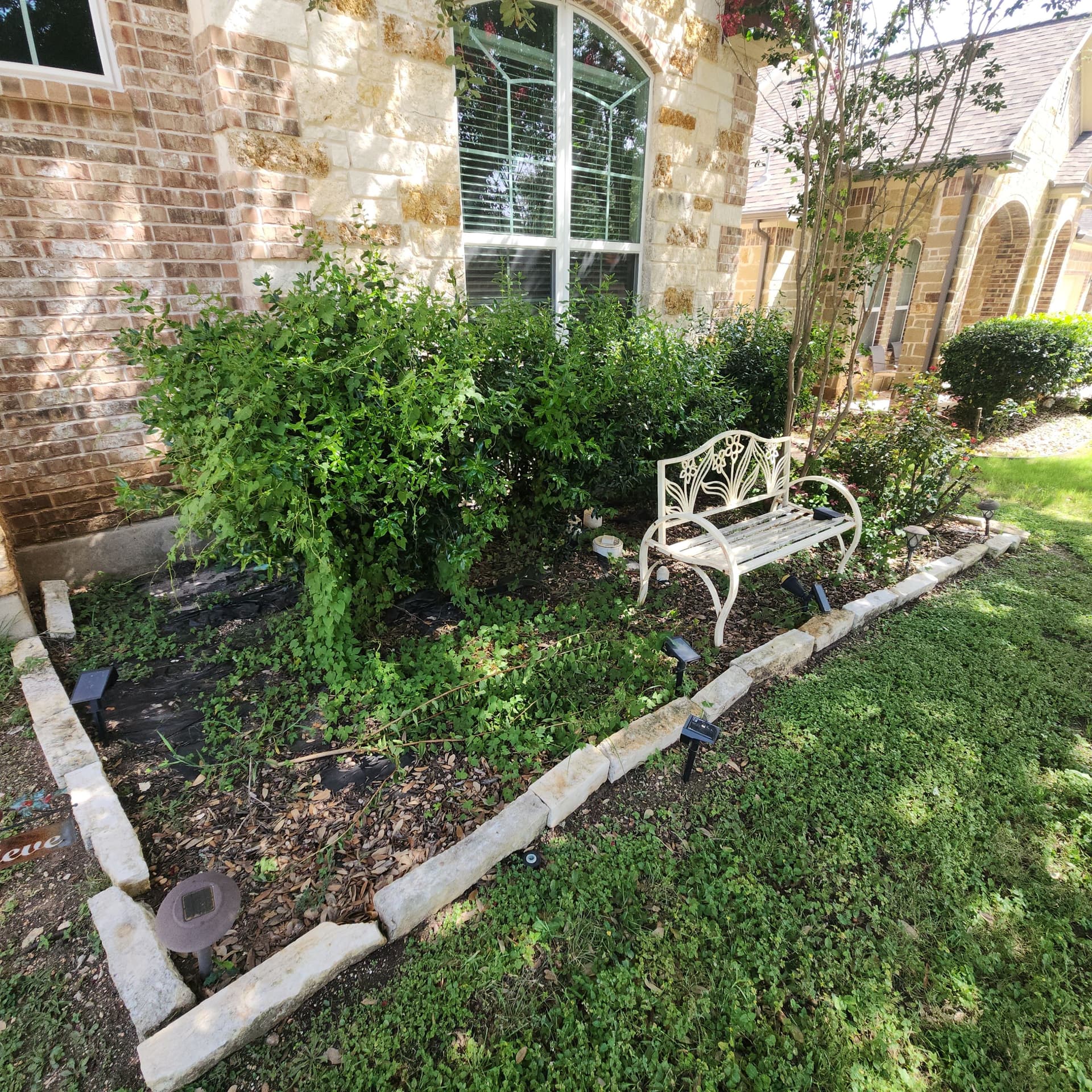





Here's what we were working with - a front bed that had gotten away from the homeowner. Shrubs were growing into each other, a large tree canopy was hanging heavy over the roofline, and the beds were crowded enough that airflow was basically gone. It's a really common situation. Things look fine for a while, then one season you look up and it's just... a lot.
We started by trimming back the tree canopy to get it off the roof and open things up. When a canopy gets that dense and low, it's not just a visual problem - it holds moisture, limits light, and can cause real issues over time if branches are sitting too close to the structure. Getting those limbs back gave the whole front of the house room to breathe.
Then we moved to the beds. We cleared out the overgrowth, shaped the shrubs back into clean, uniform rounds, and pulled everything that was crowding the base of the plants. What you end up with when you do that kind of cleanup right is a bed that actually shows off the plants instead of hiding them.
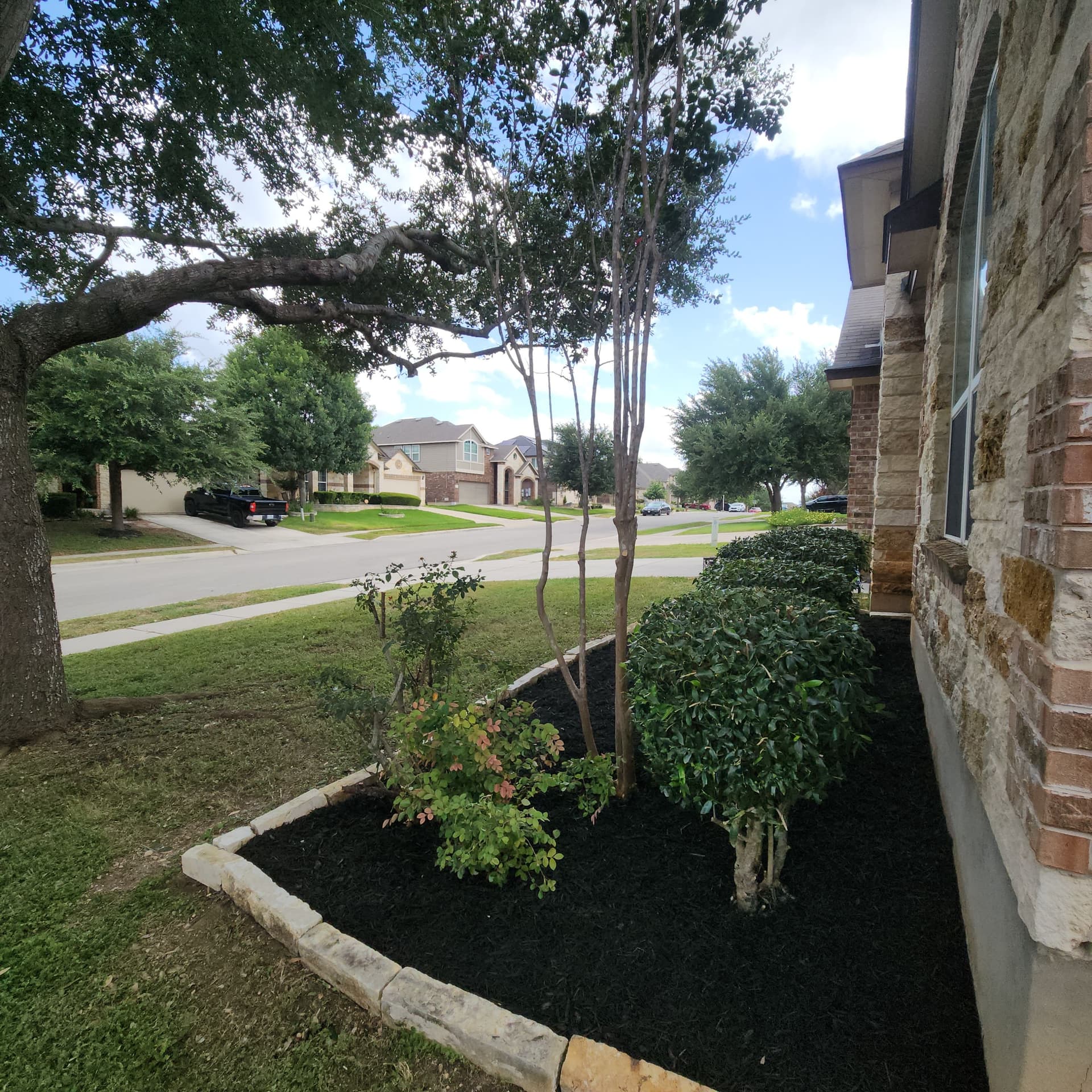
To finish it off, we laid fresh black mulch across the entire bed. Black mulch does a lot of work - it holds moisture, suppresses weeds, and makes the green of the shrubs pop against the natural limestone edging. That contrast between the dark mulch and the light stone border is one of those details that ties the whole front of the house together.
The after speaks for itself. Tight shrubs, a lifted canopy, clean stone edging, and a fresh bed of black mulch. That's the kind of cleanup that makes a big difference in curb appeal without changing anything structural about the landscape.