Tree Trimming That Clears the Way Without Hurting the Tree
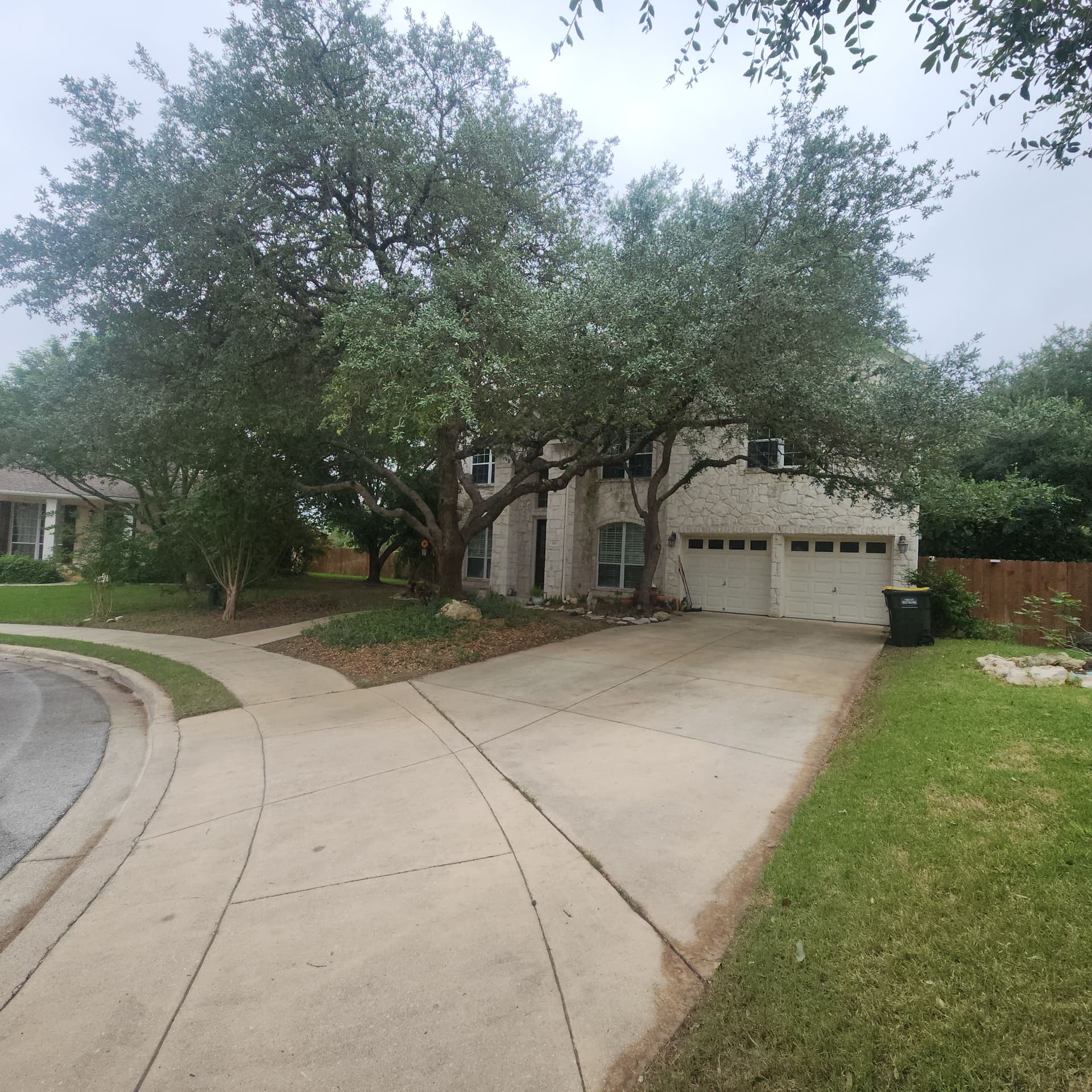
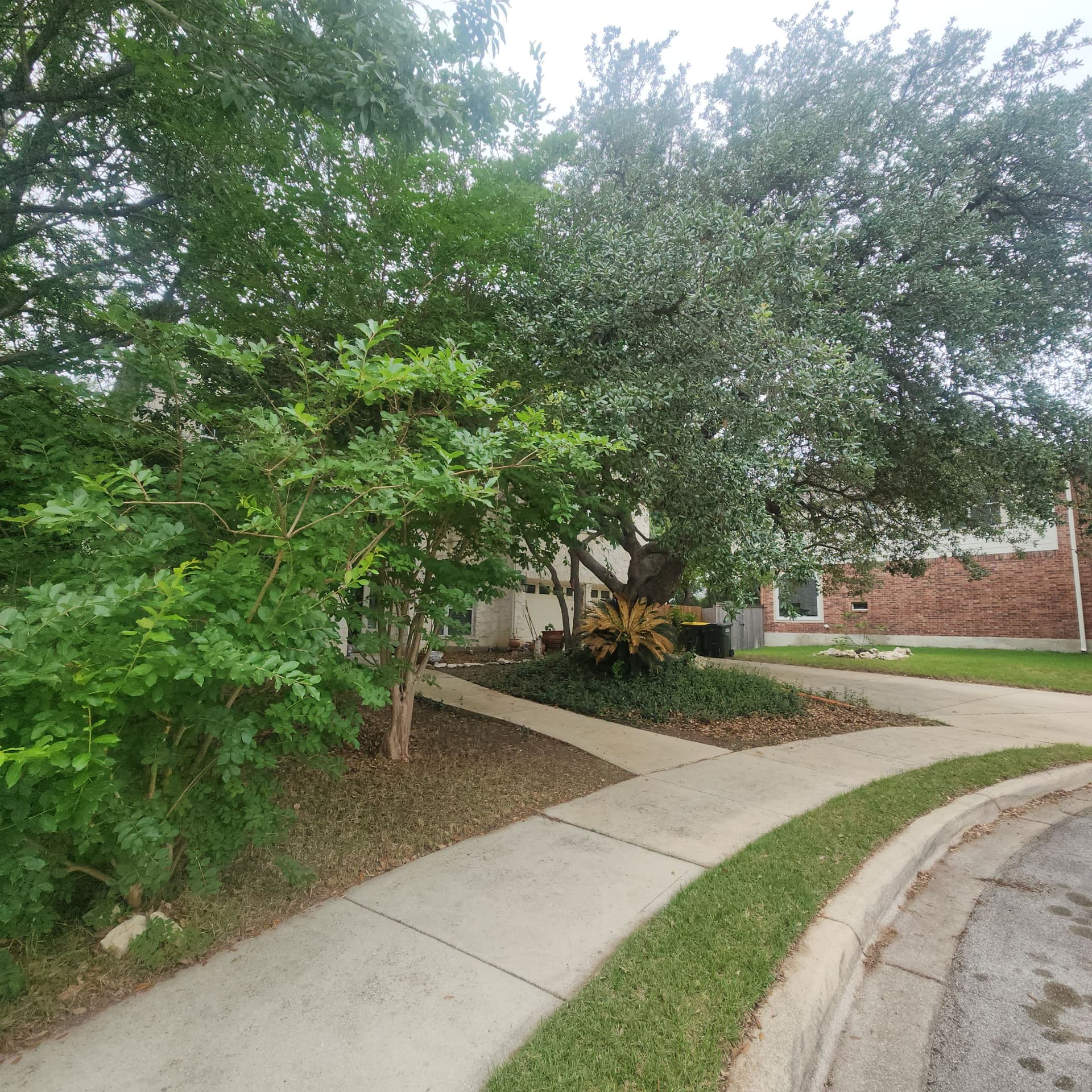
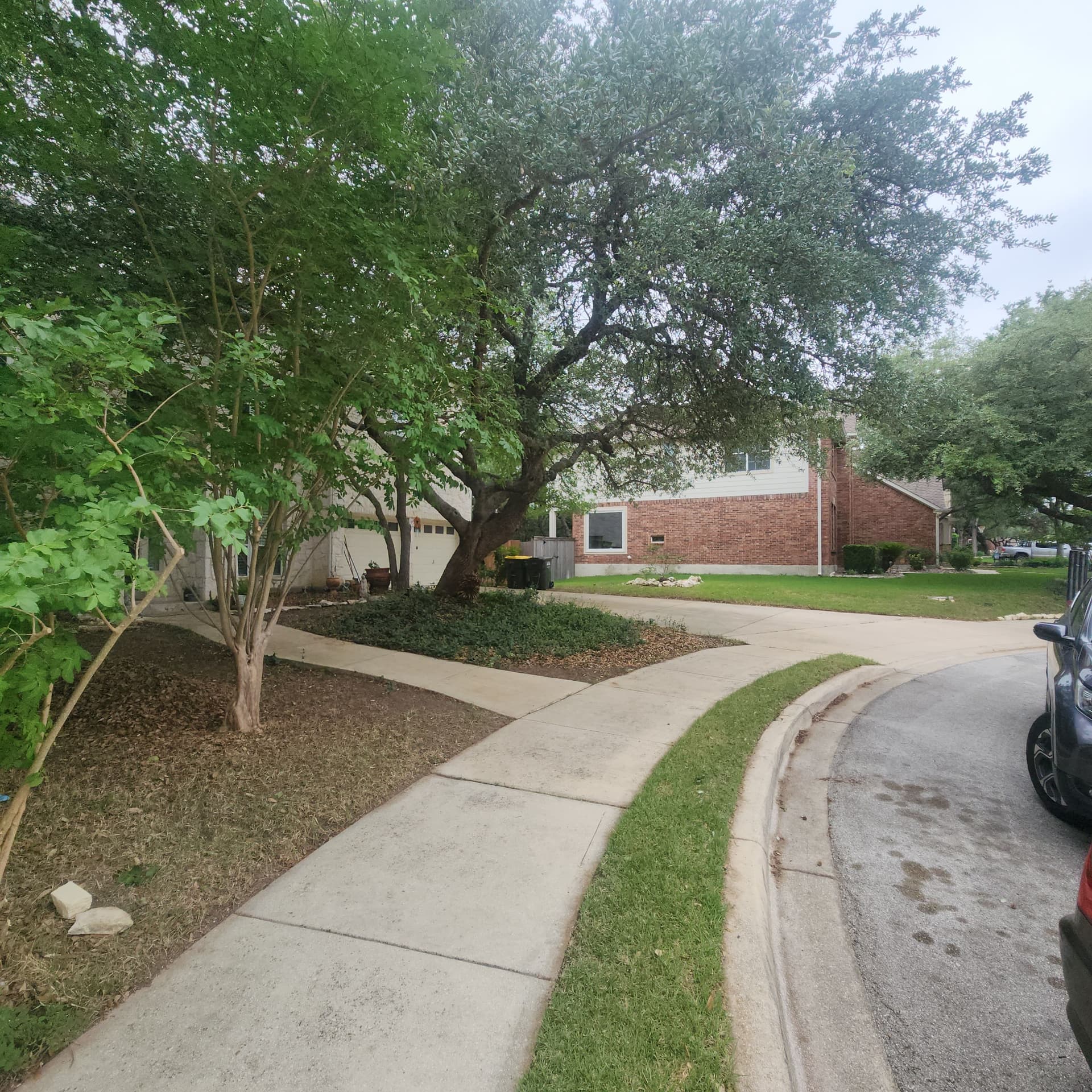
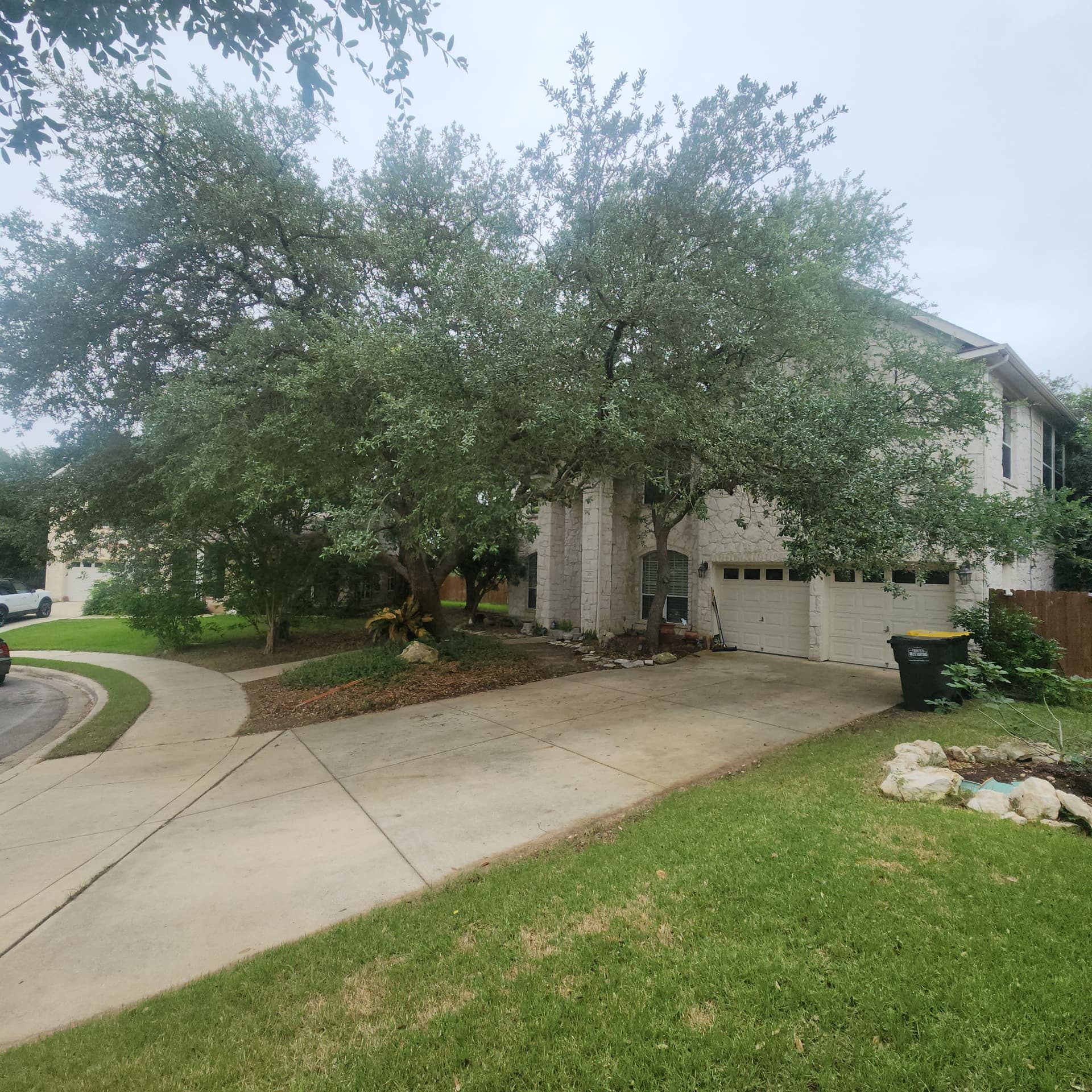
When branches start hanging low over a driveway or sidewalk, most homeowners put it off. It feels like a big job, and nobody wants to mess up a mature tree trying to fix it. But left alone, low-hanging limbs become a real problem - scraping vehicles, blocking sightlines, and creating a hazard for anyone walking underneath.
Here's what we focus on when we get into a situation like this: clearing what needs to go, and leaving the rest alone. Over-trimming is one of the most common mistakes people make with trees. You pull too much, and the tree spends the next year or two just trying to recover instead of growing strong. We take only what the situation actually calls for.
The canopy on this property was dense and spread wide - mature trees with a lot of character. Our goal was to open up clearance along the driveway and sidewalk without stripping the tree of what makes it healthy. That means working branch by branch, being deliberate about each cut, and keeping the overall shape intact as much as possible.
Safety drove the decisions here - for foot traffic on the sidewalk and for vehicles pulling in and out of the driveway. But we never let urgency on the safety side push us into cutting more than we should. Those two things - safety and tree health - have to stay in balance, and that balance is what separates a careful trim from one that does long-term damage.
Big trees like these are an asset to a property. They add shade, they add character, and they take decades to grow. Treating them right during a trim means they keep doing their job for years to come.